For decades, South African buildings have been constructed with little or no meaningful wall insulation. While roof insulation has gradually gained recognition under SANS 10400-XA, external wall thermal performance remains highly undervalued in mainstream construction practice.
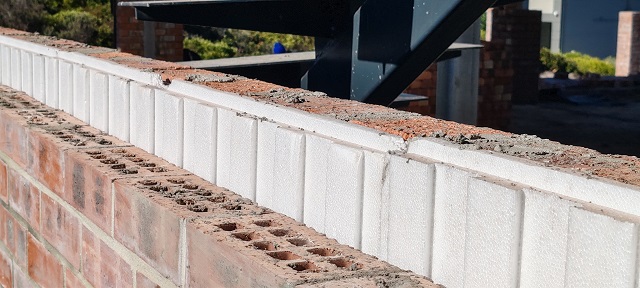
This reflects outdated norms formed during periods of historically cheap and reliable electricity, limited environmental accountability, and lower levels of urban development.
Limitations of the existing methods
South Africa encompasses multiple climatic zones ranging from cold inland regions such as Gauteng and the Free State, to humid coastal regions such as KwaZulu-Natal, and extremely hot interior regions including Limpopo and Mpumalanga. Buildings in these climates experience substantial heat gains and losses through external walling systems, particularly where traditional uninsulated masonry or lightweight construction methods are used. Yet despite this climatic diversity, many buildings continue to rely on cavity walls alone to provide sufficient thermal performance.
The air cavity itself may marginally reduce conductive heat transfer, but the overall assembly still allows substantial heat flow because masonry materials remain thermally conductive, cavities are often bridged by mortar droppings and wall ties, radiant heat transfer still occurs across the cavity, and thermal mass alone cannot prevent heat flow - it merely delays it.
One of the most misunderstood concepts in building physics is the interaction between insulation and thermal mass. Heavy masonry walls such as concrete, clay brick, and blockwork behave very differently from lightweight wall systems such as steel framing, fibre cement, drywall, or insulated panel construction. Heavyweight walls possess thermal mass, meaning they can absorb and store heat energy before releasing it later. In practical terms, a heavy masonry wall may delay peak outdoor heat transfer by several hours, while lightweight walls react rapidly to external temperature changes. Thermal mass is therefore not a substitute for insulation.
Wall insulation
Wall insulation is not only relevant to luxury homes or premium office developments. It affects virtually every occupancy category regulated under South African building standards, including residential buildings, schools, healthcare facilities, retail centres, warehouses, industrial buildings, hospitality facilities, and government infrastructure.
Wall insulation significantly reduces heating and cooling loads, improves occupant comfort, lowers operating costs, reduces greenhouse gas emissions, reduces condensation risk, and improves resilience during power outages.
For most South African climates, practical whole-wall targets should increasingly move toward approximately R-2.0 to R-3.5 m²·K/W (R-value being a measure of thermal resistance) for residential external walls, with higher values justified in air-conditioned commercial environments and lightweight structures.
Lightweight walls generally require higher insulation levels because they lack thermal inertia, while heavyweight masonry systems may achieve excellent performance when insulation is externally applied and thermal mass is retained internally.
Theory will take you only so far
Insulation products are generally tested under highly controlled laboratory conditions using steady-state methodologies such as guarded hot plate or heat flow meter testing. These tests establish the thermal resistance of the insulation material itself under ideal conditions.
However, buildings do not operate under ideal laboratory conditions. Once insulation is installed within a real construction assembly, its effective thermal performance is influenced by thermal bridging, framing losses, air movement, compression, installation quality, radiant heat transfer, moisture content, cavity ventilation, junction detailing, structural penetrations, and dynamic climatic conditions.
As a result, the actual thermal resistance of the installed system is often much lower than the nominal thermal resistance of the insulation product.
Follow the pack
Globally, modern building energy standards are beginning to recognise the limitations of product-only thermal compliance. Advanced standards and modelling methodologies increasingly evaluate effective assembly U-values, whole-wall R-values, repeating thermal bridges, linear thermal transmittance, dynamic thermal behaviour, and full building energy simulation. Embodied energy and lifecycle environmental impact are also being discussed in responsible specifications. South Africa should therefore avoid locking itself into ‘paper compliance’, with its building stock technically satisfying deemed-to-satisfy tables, while exhibiting inadequate performance in reality.