Why is daylight important?
Daylight is important because it helps regulate our biological clock, also known as the circadian rhythm. Exposure to natural daylight helps entrain our bodies to the natural light-dark cycles, which in turn improves our overall health and well-being. Additionally, daylight provides us with vitamin D, which is important for bone health and immune function. It can also improve our mood and productivity, helping us feel more connected to the natural world.
Daylight in Buildings
Daylight should be a significant source of illumination for all spaces with daylight openings. Daylight is strongly favoured by building occupants for adequately illuminating indoor surfaces, with high colour rendering and illuminance, and with variability in direction and spectral composition throughout the day and seasons.
In interiors with side windows, however, the available daylight decreases rapidly with distance from the window. Direct sunlight can also be a major source of discomfort glare and can cause overheating of the space. Weather conditions may also influence daylight intensity and distribution, thereby affecting indoor illuminance uniformity. Exposure to sunlight and the effective hours of sunlight exposure in an indoor space depend, obviously, on the outside weather conditions, but also on the orientation of the building façade.
For any space with daylight openings, it is recommended to use shading devices to reduce the risk of glare and to avoid direct views of the sun or its reflection. Personal lighting control can include daylight control via shading systems.
Buildings typically have multiple rooms with no direct access to daylight, either because they lack exterior walls or because they are located within the building, far from windows that open to the outside. In the case of renovations, it is not always economically feasible, or even permitted, to create openings in a building’s facade due to existing heritage legislation.
Summary
Daylight is the most natural light source on Earth. Daylight is favoured by building occupants because it supports a healthy circadian rhythm, thereby improving our overall health and well-being. However, daylight is not always easily accessible in many parts of a building. Daylight regulations, standards, and building certification therefore include many exemptions to allow spaces in buildings where people spend long hours indoors without access to daylight.
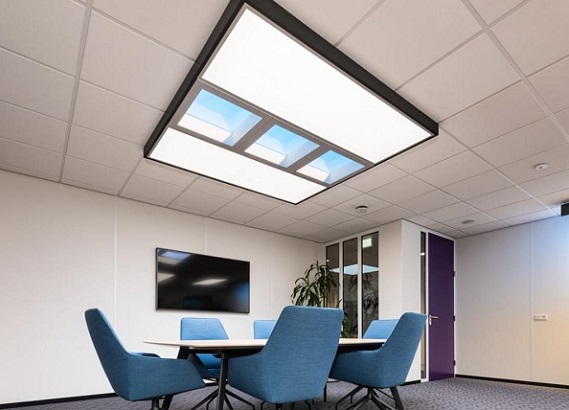
NatureConnect by Signify brings the benefits of natural light indoors, creating comfortable, engaging and attractive environments. Although it cannot be formally classified as Daylight, it is the best alternative, delivering a sunlike, human-centric light experience that improves sleep quality, entrains the human circadian system, and enhances mood and productivity. It is indistinguishable from a real window, providing a daylight effect, a view of the sky, and a greater sense of spaciousness. NatureConnect by Signify applies light recipes with high melanopic values to boost people's energy while providing comfortable, functional lighting.
To learn more, please visit www.signify.com/NatureConnect