Blok is reshaping urban living through design-led density, walkable neighbourhoods and people-first development. Construction World spoke to Troy Squires, their Head of Marketing.
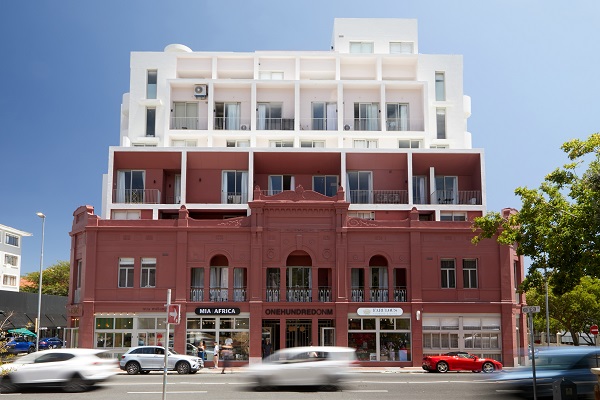
For Blok, urban development is about far more than delivering apartments. The Cape Town-based developer has built its reputation on the idea that buildings should actively contribute to the neighbourhoods around them, creating connected urban environments that prioritise convenience, walkability and community.
At a time when South African cities are grappling with densification, rising property costs and changing lifestyle expectations, Blok has positioned itself at the forefront of a new urban living model. One that places human experience at the centre of development.
According to Troy, the company’s approach differs fundamentally from traditional property thinking.
“Many developers focus strictly on yield per square metre. We focus on the value of the experience within those square metres,” he says. “We measure city life in steps rather than kilometres.”
That philosophy has become increasingly relevant as urban buyers shift away from the long-commute suburban model in favour of connected city living that offers greater convenience and quality of life.
Designing the neighbourhood, not just the building
Blok’s developments are strongly influenced by the concept of the 15-minute city, where residents can access work, retail, recreation and essential services within a short walking radius.
The company begins each project by analysing the surrounding urban fabric and understanding how people move through the area. Walkability, access to amenities and the broader street environment all influence the design process from the earliest stages.
Rather than treating developments as standalone structures, Blok approaches each building as an extension of the surrounding neighbourhood.
This thinking directly shapes how space is allocated inside developments. While apartments are designed to be compact and efficient, communal areas are intentionally generous and highly activated.
Shared rooftop decks, co-working facilities, retail spaces and communal social zones are integrated into projects from inception. The aim is to create what the company describes as “integrated-neighbourhoods” that encourage interaction and strengthen community connection.
“If private spaces are intentionally efficient, communal zones must be exceptionally accommodating,” says Troy.
The approach reflects a broader shift in urban living preferences, particularly among younger buyers and professionals who increasingly value access, flexibility and lifestyle over excess space.
Compact living without compromise
Blok’s apartments are known for combining smaller footprints with strong functionality and high-end design. Achieving affordability, however, is not simply about reducing apartment size.
Instead, the company focuses on what Troy describes as intentional value engineering. “We believe that design has the power to improve lives, and that means making urban living accessible to a broader demographic without sacrificing architectural integrity,” he explains.
Every aspect of the apartment layout is carefully considered to eliminate wasted space and improve functionality. Built-in furniture solutions, integrated workspaces and highly efficient kitchen and bathroom designs all form part of the strategy.
The company also works closely with established suppliers and appliance brands to ensure long-term durability and operational efficiency for homeowners.
At the same time, sustainability is becoming an increasingly important part of the urban living equation.
Blok incorporates solar systems, rainwater harvesting and water-wise infrastructure into developments, while the compact nature of its apartments naturally reduces overall resource consumption per resident.
The company believes higher-density urban living represents one of the most sustainable long-term growth models for modern cities.
Amenities drive modern demand
Changing work patterns and lifestyle expectations are also reshaping buyer priorities within the apartment market.
For Blok, amenities such as concierge services, co-working spaces and integrated retail are no longer luxury additions. They are essential infrastructure for modern urban living.
“The rise of hybrid work models has completely redefined the concept of a home,” says Troy. “A building must now function as a workplace, a sanctuary, and a social hub simultaneously.”
Co-working facilities allow residents to work productively outside their apartments, while concierge services and ground-floor retail create a hospitality-style living experience that prioritises convenience and accessibility.
This model also strengthens the investment case for buyers. High-quality amenities improve tenant demand, occupancy levels and overall building desirability, particularly within the growing short-term rental market.
Blok believes the balance between investor needs and resident experience is critical to long-term value creation.
“Our buildings offer everything from functional Compact Studio apartments to glorious Penthouse apartments,” says Troy. “Ultimately, a building that is deeply loved and properly managed retains its capital value far better.”
Finding value in emerging urban pockets
While Cape Town’s Atlantic Seaboard and City Bowl remain among the country’s most desirable residential markets, Blok continues to focus on identifying underutilised urban sites with future growth potential.
The company actively targets older low-density buildings and overlooked commercial properties that can be repositioned into mixed-use urban developments. By entering these locations early, Blok aims to secure favourable land positions before wider market demand accelerates.
“When the broader market catches up to the potential of that specific street or pocket, our early-stage buyers experience the strongest capital appreciation curves,” says Troy.
This strategy reflects the company’s longer-term view of urban development, where neighbourhood evolution and infrastructure investment play a significant role in determining future value.
A different vision for South African cities
Over the past decade, Blok believes South Africans have fundamentally changed the way they think about housing and urban life.
Traditional ideas around suburban living, large homes and isolated lifestyles are steadily being replaced by a growing preference for connected, experience-driven urban environments.
“We’ve learned that many people don’t want to live in isolation,” says Troy. “They want a connected urban lifestyle where they measure their days in steps, time saved and social interactions.”
Blok sees itself playing an increasingly active role in shaping the future of South African urbanism through design innovation, mixed-use density and community-focused development.
Rather than viewing itself purely as a developer, the company increasingly positions itself as a precinct-driven urban player focused on creating environments that contribute positively to the broader city.
“We are here to show that when a building gives back to its neighbourhood, it creates an equitable, sustainable, and deeply loved urban environment where the community can thrive,” says Troy.